Boots on the Ground
The story of five British soldiers trying to stay alive on the last night of the Afghan War, facing not just the Taliban, but also supernatural forces more terrifying than anything they've encountered before.
Browse popular War movies
The story of five British soldiers trying to stay alive on the last night of the Afghan War, facing not just the Taliban, but also supernatural forces more terrifying than anything they've encountered before.
Wartime tale of a group of British scientists efforts to develop the first radar system. They did it just in time for it to be used in the Battle of Britain against the might of the Nazi Luftwaffe. Without it the little island could well have been overrun.
Melia Nobbs, a young Canadian woman, supports both her invalid father Ambrose and brother Henry. When Henry faces arrest for helping himself to his employer's cash, Melia steals the amount from the star of the theater where she has been dancing and offers it to her brother if he will enlist in the army. Henry agrees and goes off to war, making Ambrose proud of his son, but when Ambrose learns that his daughter has been arrested for theft, he disowns her. Melia does not reveal the reason for taking the money and is sent to prison. Meanwhile, Henry fights bravely in France and returns home minus an arm but wearing the Victoria Cross. He finds his sister, weak and worn from overwork, in the prison hospital. Seeing her brother with his medals, Melia realizes that her sacrifices for him and her country have not been in vain, and that in her own way, she has served her country.
For the USA, World War 2 was an all-out war - to mobilize the masses, the US government launched a huge propaganda campaign and cinema, the medium of the masses, was quite simply their most important weapon. Government authorities monitored the production of feature films and the military itself produced documentaries aimed at rallying the American people to support the troops. This film tells the story of four Hollywood directors of European origin, who returned to the "Old World" during the Second World War to make propaganda documentaries for the US Army at the front: William Wyler from Alsace, Frank Capra from Italy, Anatole Litvak from Ukraine and - in post-war Germany - Billy Wilder from Austria.
The final stage of the great artist's life, a stage in which Witkacy decides to destroy himself. A growing sense of danger, the futility of all actions, and fear of what is to come accompany him constantly during his escape from Warsaw to the East at the outbreak of World War II. Everyday facts and events are intertwined in the film with reminiscences and images from his life, supported by the artist's inner monologue. The style of narration and the way of filming make the film a poignant study of the writer's inner disintegration. By emphasizing the painterly quality of the image and introducing dreamlike themes, Kluba captures on screen the characteristics of both Witkacy's playwriting and painting.
The story of the hero Seifuddin Qutoz, defender of Jerusalem and conqueror of the Mongols. The events take place in Khwarizm, India, Syria and Egypt between the years 617-658 of the 7th Hijra century (1220-1260 A.D.).
Back in 1986, Phon said goodbye to his son, Ton, who had been sent to fight in the Ban Rom Klao battlefield in Phitsanulok. As time passed, while Phon waited for his son to return home, he encountered something he could never expected.
A British Intelligence Officer in Naples at the end of World War II: Norman Lewis's acknowledged masterpiece about a war-torn city and its unforgettable humanity.
Set in Norway and has a crack team of Allies sent to blow up an underground Nazi factory where the Germans have taken a crashed Spitfire that contains a new radar system that the krauts want to copy.
The film depicts the struggle of brave men and women who sacrificed their lives for their homeland, their love, and everything they held dear during the 1939 Khalkh Gol War.
The writer Jan Kellert - the author of the widely known book "The Legend of the Vistula", which is part of the canon of pre-war middle school reading, comes from Lublin to Żmurki, where he spent the occupation. The division of the Żmurki estate is to take place the next day. The welcome dinner becomes an opportunity to exchange political views and a critical view of the manor's inhabitants on the current situation.
The film recounts in three parts by three different directors the Algerian people's struggle for independence after 130 years of French colonization: Ahmed Bedjaoui "Les Fedayines," Rabah Laradji "La Bombe," Sid Ali Mazif "Le Messager."
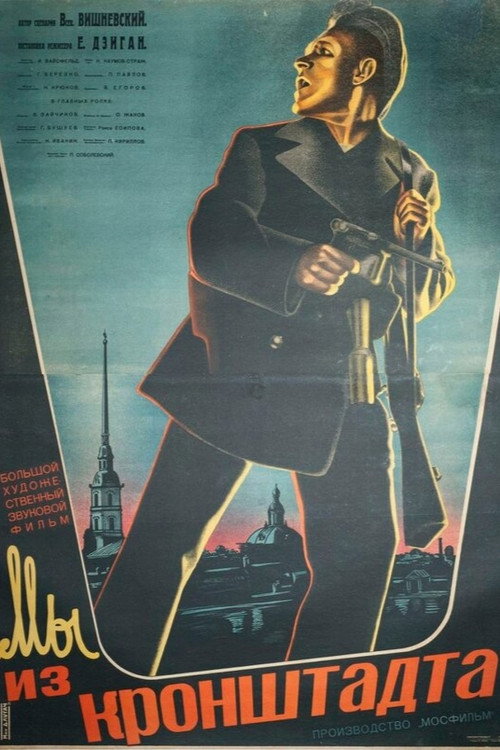
In 1919, during the post-revolution Russian Civil War, a naval detachment made up of communist Reds defends the strategic city of Petrograd from the White Russian counterrevolutionary forces
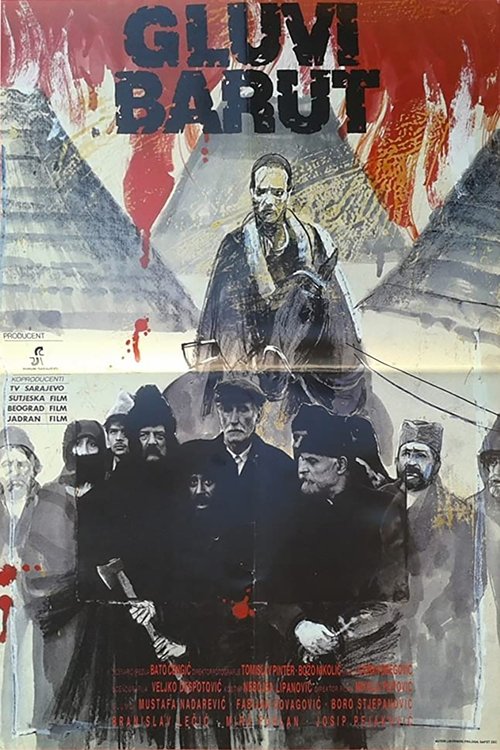
Silent Gunpowder (Serbo-Croatian: Gluvi barut) is a Yugoslavian war film Based on a novel by Branko Ćopić and set during World War II, the film tells the story of a Serbian village in the mountains of Bosnia and its villagers who found themselves divided along two opposing ideological lines, represented by the Chetniks and the Partisans. These two opposing sides are personified in the Partisan commander Španac and a former Royal Army officer Radekić. Španac sees Radekić as the cause of villagers' resistance to the new, Communist, ideology and so the main plot axis is the conflict between them. At the 1990 Pula Film Festival, the film won the Big Golden Arena for Best Film, as well as the awards for Best Actor in a Leading Role (Branislav Lečić), Best Film Score (Goran Bregović). The film was also shown at the 1991 Moscow International Film Festival, where both Branislav Lečić and Mustafa Nadarević won the Silver St. George Award for their performances.
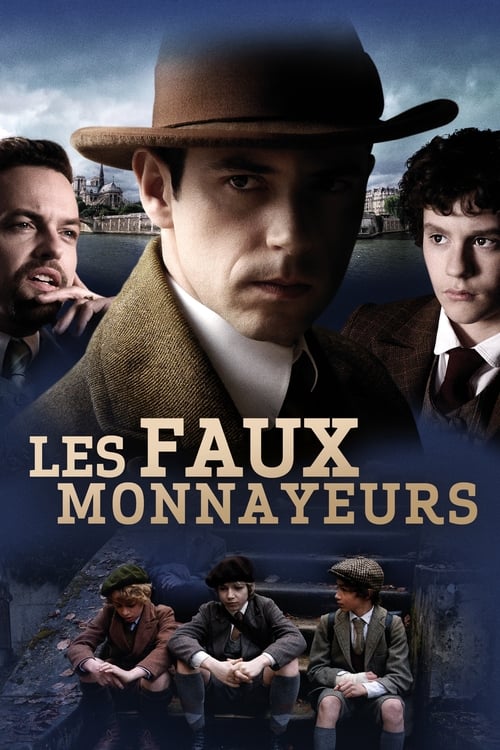
The plot revolves around Bernard – a schoolfriend of Olivier's who is preparing for his bac – discovering he is a bastard and taking this as a welcome pretext for running away from home. He spends a night in Olivier's bed (where Olivier describes a recent visit to a prostitute and how he did not find the experience very enjoyable). After Bernard steals the suitcase belonging to Edouard, Olivier's uncle, and the ensuing complications, he is made Edouard's secretary. Olivier is jealous and ends up in the hands of the cynical and downright diabolical Comte de Passavant, who travels with him to the Mediterranean.
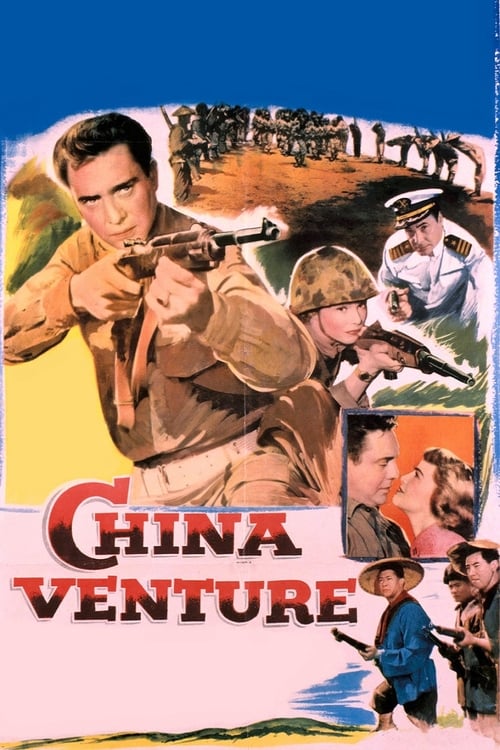
American soldiers undertake a mission to capture a Japanese admiral who has survived an air crash in China during WWII.